Content engine
Reels, articles and posts written, rendered and published to eight channels by agents, with a Telegram button as the only human step.
Screenshot 1 of 9


Stack
Pipeline
- 1
Topics arrive on a schedule
A scheduler wakes the backend three mornings a week for reels and once a week for articles; topics come from the agency's own project activity first and from a web research model second, and land in a Telegram chat as a card with buttons.
Cloud SchedulerFastAPIPerplexity - 2
A tap writes the draft
One button turns a topic into a reel script with captions for every channel, or into a full article written as markdown first with metadata extracted in a separate call, plus cover images.
GPT-4oGPT Image 1 - 3
An evaluation gate scores the draft
A deterministic layer checks word count, structure, link-free FAQ answers and typography, then a model judge scores accuracy, depth and tone; a failing draft goes back for revision before anyone sees it.
FastAPIGPT-4o - 4
Reels are rendered as avatar video
The script becomes a vertical video through HeyGen's video agent, polled to completion and archived; a render gate in Telegram shows the result before publishing.
HeyGen - 5
The founder approves in Telegram
Every draft, render and post is a card with Approve and Reject; nothing leaves the building without a tap, and approve is the publish trigger rather than a status change.
Telegram Bot API - 6
Rails publish to eight channels
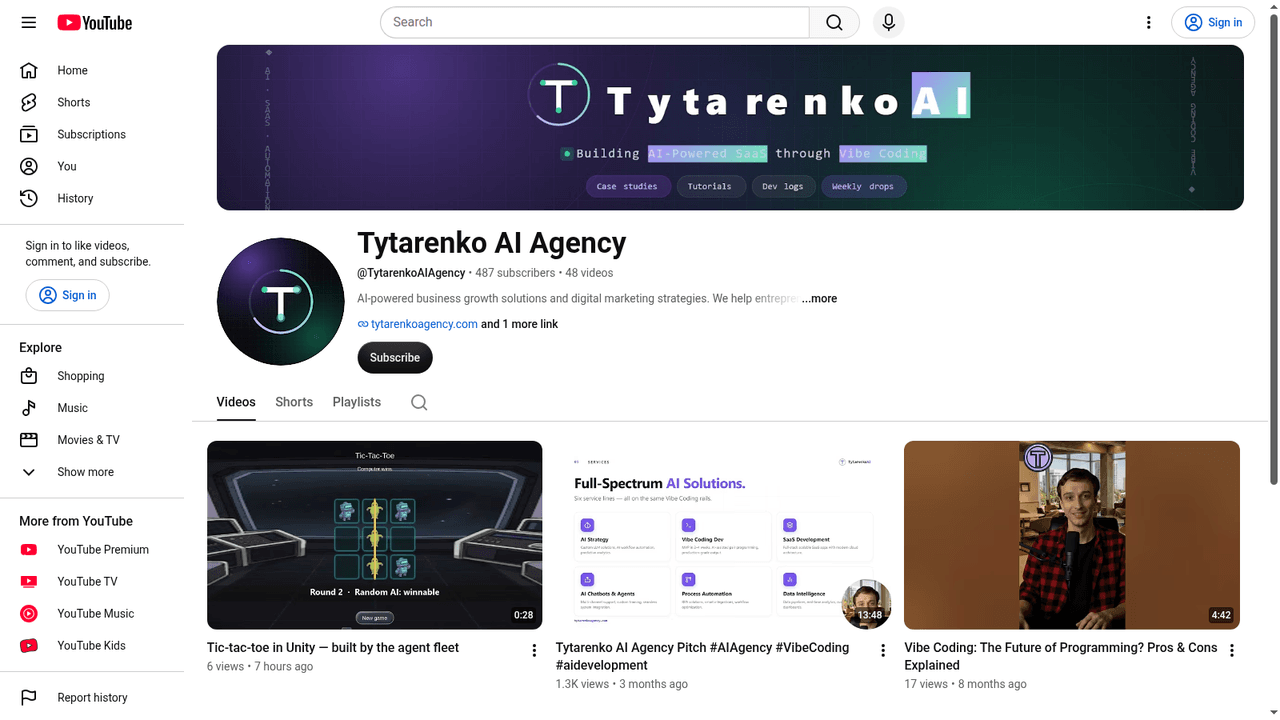
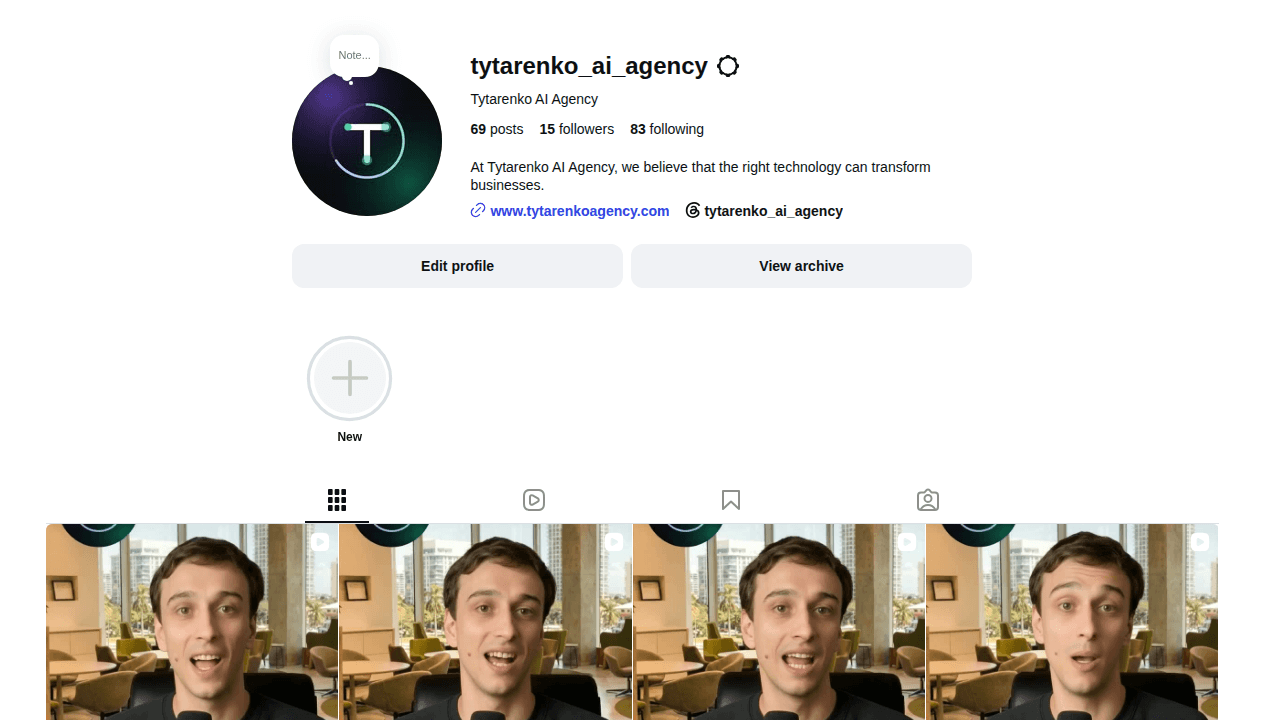
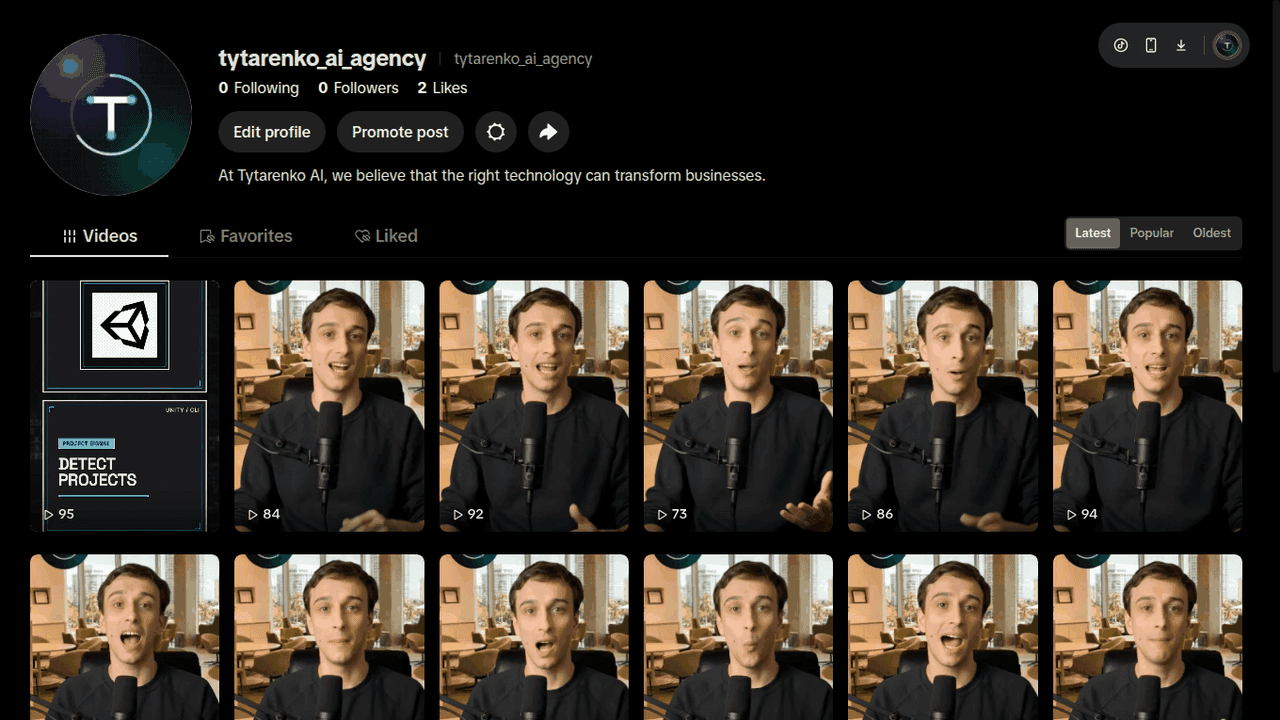
An API rail posts to YouTube, Instagram, Threads, LinkedIn, X and Facebook, the channel bot posts to Telegram, and a browser rail drives a logged-in Chrome for TikTok; articles publish to the site with a newsletter, llms.txt and an IndexNow ping, then a teaser goes to five channels.
FastAPIChrome DevTools ProtocolNext.js - 7
Numbers come back
Per-post metrics are collected from every platform and the account-level growth curve is swept on a timer, so the next round of topics is chosen with results in view.
PostgreSQLGitHub Actions
Links
Where it runs
On this site
What it does
The content engine is how Tytarenko AI Agency publishes without a content team. It proposes topics, writes reel scripts and long articles, renders avatar videos, puts every piece in front of the founder as a Telegram card, and after one tap publishes to eight channels: YouTube, Instagram, Threads, LinkedIn, X, Facebook, Telegram and TikTok. Articles go to the site's blog with a newsletter, a machine-readable index and a search-engine ping, and then a teaser post to five channels.
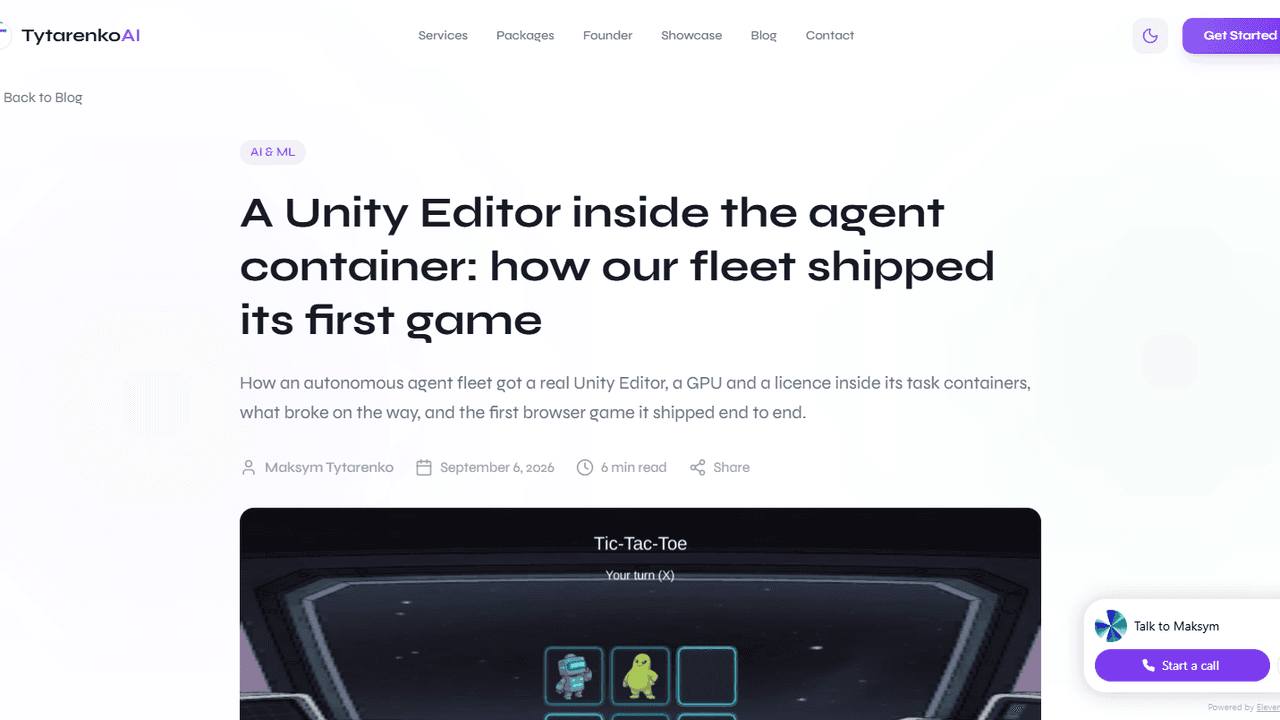
It is the pipeline this showcase itself is produced by: the article about the fleet's first Unity game went through the same gate.
How it works
A scheduler wakes the backend three mornings a week for reels and once a week for articles. Topics are drawn from the agency's own project activity first, so the content is about work that actually happened, and from a web research model second. Each proposal arrives in a Telegram chat as a card with buttons.
A tap on a topic writes the draft. A reel becomes a script plus a caption for each channel, written by the OpenAI models listed above, the larger one for the script and the smaller one for the lighter calls. An article is generated as markdown first, with its metadata extracted in a separate structured call, because asking a model for a long text inside JSON breaks on an unescaped quote thousands of characters in. Covers come from OpenAI's image model and are cropped to the aspect ratios each platform expects.
Before a draft reaches the founder it passes an evaluation gate: a deterministic layer checks word count, structure, that FAQ answers carry no links and that typography rules hold, then a model judge scores accuracy, depth and tone. A failing draft is revised and rescored before the founder sees it.
Reels are rendered as vertical avatar video through HeyGen's video agent. The backend polls the render, downloads and archives the file, and posts a render gate. The founder approves the video, then the batch publishes: an API rail for YouTube, Instagram, Threads, LinkedIn, X and Facebook, the channel bot for Telegram, and a browser rail that drives a logged-in Chrome over the DevTools protocol for TikTok, whose posting API is still under audit. A publish-due sweep every few minutes completes batches and retries what failed.
After publishing, the engine collects per-post metrics from every platform and sweeps the account-level growth curve on a timer, so the next topics are proposed with the last results in view.
The engine was built by the agency's own agent fleet and the founder's sessions: the executor, review and security-review models are the Claude and Grok entries listed above, as counted in the fleet's task log on 2026-09-06. The approval gate went live on 2026-06-23, avatar reels with their render gate on 2026-07-06, and the article pipeline with teasers and the search-engine ping on 2026-07-11.
Where to see it
The output is public: the blog on this site and the agency's channels, starting with YouTube, LinkedIn, Instagram and the Telegram channel. The gate itself is a private Telegram chat and stays private.
Share this case